Global oil prices climbed to their highest level since 2022 as markets reacted to growing uncertainty around energy supply routes and potential disruptions in key shipping channels.
Brent crude briefly surged by nearly 7%, reaching above $126 per barrel before settling around $116 in later trading sessions. This marks the strongest level since global supply shocks triggered by earlier international disruptions.
Analysts say the rally has been driven by concerns over possible interruptions in the Strait of Hormuz, a critical route through which a significant share of the world’s oil supply is transported.
Energy markets have remained volatile throughout the week, with traders closely watching developments that could impact global shipping and supply stability.
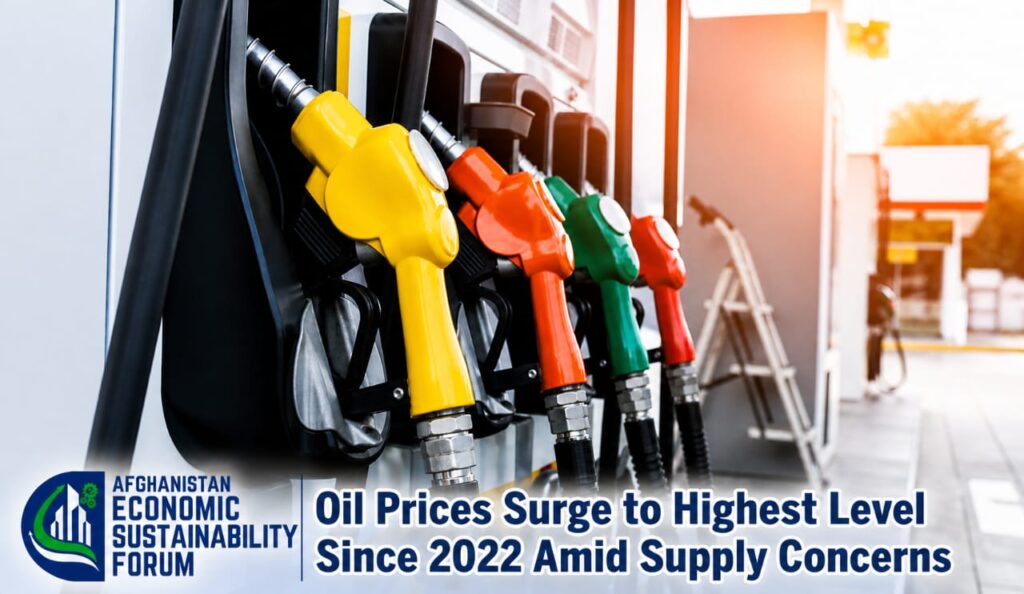
Rising crude oil prices are directly affecting fuel costs, with petrol and diesel prices increasing in several countries. In the United Kingdom, average petrol prices stand at around 157 pence per liter, while diesel remains significantly higher.
Experts note that changes in seasonal demand, transportation trends, and refinery supply patterns are also influencing short-term price movements.
Beyond fuel, economists warn that higher oil prices could contribute to increased costs in food production, transportation, and air travel, potentially adding inflationary pressure in the coming months.
Market analysts suggest that volatility may continue if supply uncertainty persists, with energy traders closely monitoring global developments affecting oil flow and shipping logistics.
AESF Economic insights,
A surge in global oil prices especially when Brent crude oil rises above $120, puts strong pressure on Afghanistan’s fragile, import-dependent economy by increasing transport and electricity costs, which raises prices of basic goods, fuels inflation, reduces purchasing power, worsens poverty, and weakens trade competitiveness, illustrating the law of supply and demand, where constrained supply leads to higher prices and broader economic strain. To overcome the problem, in the short term, the government can ease the impact through targeted fuel subsidies, price monitoring, and improved import logistics, while in the long term, investing in domestic oil refining, alternative energy, and regional energy diversification can reduce dependence on imports and protect the economy from future shocks.
By: Ataullah Fazli, AESFnews Reporter