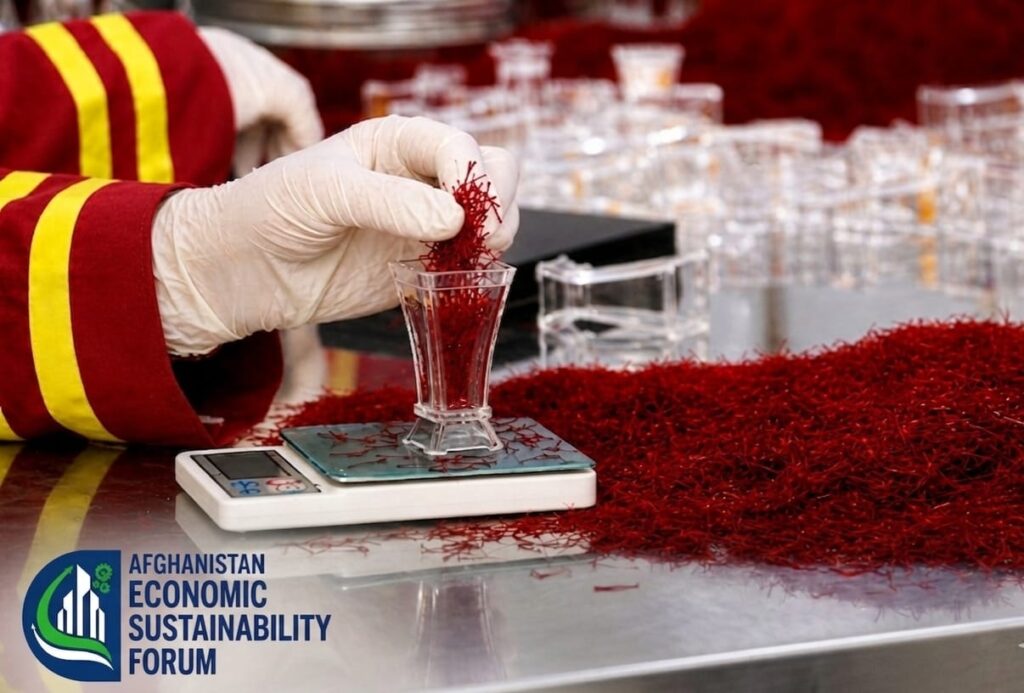
According to the Ministry of Industry and Commerce Afghanistan, Afghanistan’s saffron exports reached $54 million in 2025, marking an increase of about $10 million compared with the previous year, which represents nearly 10 percent growth.
Abdul Salam Jawad Akhundzada, spokesperson for the ministry, stated that Afghan saffron was exported to several international markets including India, Spain, Saudi Arabia, the United Arab Emirates, the United States, Canada, the United Kingdom, Italy, Turkey, and Oman.
Officials from the Herat Chamber of Agriculture and Livestock said that the growth in exports is mainly due to the expansion of saffron cultivation across different provinces as well as the high quality of Afghan saffron.
According to the chamber, nearly 90 percent of Afghanistan’s saffron is produced in Herat. Currently, about 10,500 hectares of land are under saffron cultivation, and every year more than 1,000 hectares are added as farmers increasingly turn to saffron as a high-value crop.
Qudratullah Rahmati, deputy head of the Afghanistan Saffron Union, noted that climate change and strong competition in international markets were among the main challenges facing saffron production last year. However, the growing global demand for agricultural products, particularly saffron, provides significant opportunities for Afghan producers.
Meanwhile, Afghan saffron was recognized for the tenth consecutive year as the world’s highest-quality saffron by the International Taste Institute during an international competition held in Brussels, where saffron from Afghanistan competed with products from Iran, Spain, and Greece.
AESF Economic insights,
Increase in the Saffron export will positively impact the economy by boosting foreign exchange earnings, improving the trade balance, creating rural employment, and increasing farmer incomes, all of which support growth through the economic principle of comparative advantage, where Afghanistan specializes in producing high quality Saffron more efficiently and cheaper than competitors. In the short term, growth can be accelerated by improving access to finance, expanding cultivation, and strengthening export logistics and market access; while in the long term, sustained progress requires investment in irrigation, climate resilient agriculture, advanced processing and branding, international certification, and integration into global value chains to ensure competitiveness and stable export expansion
By: Ataullah Fazli, AESFnews Reporter