Afghan transit goods continue to face delays after being moved from Karachi to Jebel Ali, as regional tensions once again disrupt shipments bound for Afghanistan.
Afghan traders who recently shifted their transit cargo from Karachi Port to Jebel Ali Port are now facing renewed delays, with shipments halted due to ongoing tensions in the Middle East.
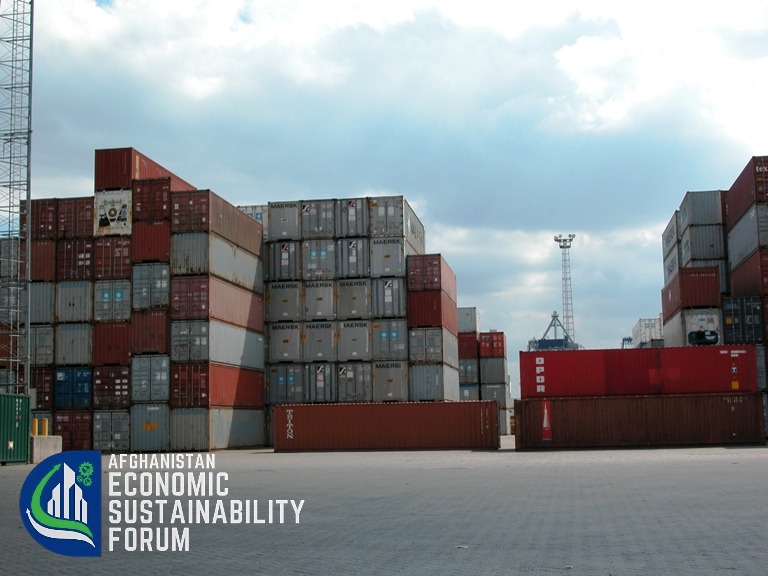
The Afghanistan-Pakistan Joint Chamber of Commerce reports that more than 9,000 containers are currently stranded at the port, with a total estimated value exceeding $5 billion.
According to the chamber, traders are incurring daily losses ranging from $100 to $200 per container, while the cargo has already been delayed for nearly 20 days.
Khan Jan Alokozay, head of the chamber, noted that traders had previously faced heavy costs in Karachi, where penalties on delayed goods reached up to $10,000 per container. He added that the situation in Jebel Ali is again placing financial pressure on traders, as daily charges continue to accumulate.
These goods had already experienced months of delay in Karachi due to disruptions in trade relations between Afghanistan and Pakistan.
Meanwhile, Haji Obaidullah Sadrkhil, head of the Afghan Traders Council in the UAE, has called on the Islamic Emirate to take serious steps to address the issue, particularly in facilitating the transfer process and easing tax-related procedures.
He emphasized that the shipments mainly consist of food supplies and medicines, warning that continued delays could further increase prices in Afghanistan.
Traders had moved the cargo to Jebel Ali after nearly four months of delays in Karachi, bearing costs of up to $10,000 per container. However, the situation has not improved, and ongoing challenges at Jebel Ali are adding to their losses.
Traders also say that, due to security concerns, most containers are not being redirected to alternative routes through Bandar Abbas or Chabahar Port.
AESF Economic Insight:
The delay of Afghan transit goods between Karachi Port and Jebel Ali Port highlights Afghanistan’s vulnerability to external shocks and regional instability, a key issue in International Trade where landlocked countries face higher transit risks and costs. In the short run, rising storage fees and shipment delays increase import prices—especially for essential goods like food and medicine—contributing to inflation and financial losses for traders, while in the long run it discourages trade, weakens business confidence, and exposes structural dependence on limited transit routes. To address this, Afghanistan should diversify trade corridors, strengthen regional agreements, and invest in more reliable logistics systems to reduce future disruptions and improve economic resilience.
By: Ataullah Fazli, AESFnews Reporter